A mountain escape can begin with a simple drive beyond Toronto’s busy streets. Renting a car gives you space for luggage, ski gear, hiking equipment, and useful stops. The Toronto to Blue Mountain journey covers about 160 to 170 kilometres and often takes 2 to 3 hours. Our guide explains every step, including routes, timing, vehicle choice, stops, parking, activities, and the return journey.
Good planning can reduce delays and help you enjoy more time around Georgian Bay. Check your route early, especially during winter and busy weekends.
The fastest common route follows Highway 400 north, Highway 89 west, then Highway 26 towards Collingwood. It covers about 160 kilometres and often takes 90 minutes to 2 hours without heavy traffic. Highway 400 has several lanes, while maintenance teams regularly clear snow and ice. Signs around Barrie direct drivers towards Collingwood and Blue Mountain.
For a more scenic drive, take Highway 410 and Highway 10 through Brampton, Orangeville, and Shelburne. This route covers about 170 kilometres and usually takes 2 hours and 30 minutes. It passes farmland and smaller towns, but winter snow may affect these roads more heavily.
Your starting point in Toronto matters when choosing between them. The Highway 10 route may suit drivers leaving Mississauga or Oakville. Highway 400 is often simpler from northern Toronto. Check an online navigation map before departure, since congestion can change the better option.
Highway 400 becomes especially busy northbound on Friday afternoons, often between 3 pm and 7 pm. There can also be delays in skiing during weekends between 7 am and 10 am. Southbound traffic often builds on Sunday afternoons. Leaving before 7 am or after 8 pm can avoid the busiest periods.
A day trip needs enough travel time for 2 to 3 hours each way, breaks, and activities. Blue Mountain receives about 8 hours and 52 minutes of daylight around the winter solstice. An early start leaves more time for skiing before darkness. An overnight stay allows a later departure, dinner in the village, and less night driving.
Choose a car type that matches your group and equipment. A compact car saves fuel and is easier to park. Families carrying skis, strollers, or several bags may prefer an SUV or minivan. All-wheel drive and higher clearance can also help during snowy conditions.
Winter tyres are strongly recommended below 7°C, when all-season tyres can lose grip. Confirm tyres and all-wheel drive before collecting the car. Plan fuel stops in Barrie or Collingwood. Electric car drivers should check charging locations before leaving, since many resort chargers provide slower Level 2 charging.
Book a car in Toronto with Final Rentals and check whether your chosen rental includes unlimited mileage and basic cover.
A well-chosen stop can divide the drive and add something memorable. Choose stops depending on your travel time, schedule, and group.
Barrie provides a useful halfway break beside Lake Simcoe. Centennial Park and the waterfront offer space for a short walk or children’s playtime. Downtown cafés and restaurants provide coffee or meals. You can also find fuel, groceries, convenience shops, and washrooms before continuing west.
Parking choices can change, so check current signs before leaving the car. A short waterfront visit can refresh everyone without taking much time from the drive.
Creemore is about 20 minutes from Highway 26 near Collingwood, using local roads towards the village. Its main street has cafés, small shops, historic buildings, and a local brewery. A brief walk or meal adds around 15 to 20 minutes, excluding the time spent exploring.
Wasaga Beach offers summer views and space along the world’s longest freshwater beach. You can walk beside Georgian Bay, use picnic areas, visit playgrounds, or enjoy the sandy shore. Each detour may add 20 to 30 minutes to the return journey. Choose one during a day trip, or visit both during an overnight stay.

Collingwood is your final stop before the resort. Supermarkets and hardware shops help you collect food, drinks, or chalet supplies. The harbour, waterfront trails, historic centre, restaurants, patios, and local beer spots also make it worth exploring. Fuel stations and meal choices are widely available. After leaving Collingwood, the final drive usually takes only 10 to 15 minutes.
Your arrival plan should cover parking, check-in, activities, and road conditions. Prepare these final details before leaving Toronto.
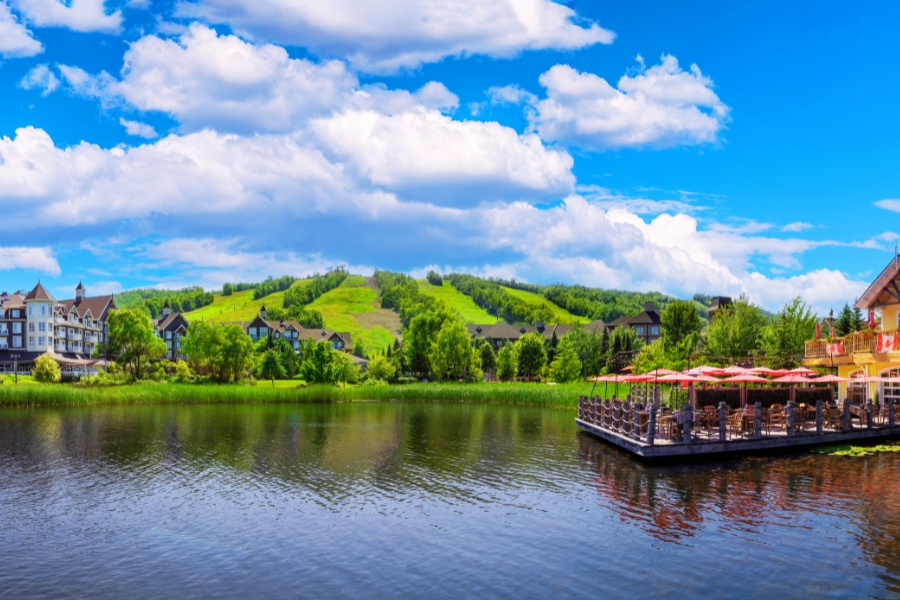
Blue Mountain has several day-guest car parks, but spaces remain subject to availability. P1A, P1, P3, P4, P5, and P6 are listed as free parking. P2 is a paid convenience lot near the village entrance. Check the current map for accessible spaces, charging points, and any parking changes.
Enter 156 Jozo Weider Boulevard for the village centre. Guests should confirm the correct check-in point for their accommodation. Most use separate check-in locations and nearby parking areas.
A local resort shuttle service connects key bases, parking areas, accommodation, and the village during operating periods. Check the current timetable before relying on it. The service can help after luggage drop-off or when using a car park farther away.
Winter visitors can enjoy skiing and snowboarding, lessons, equipment hire, snowshoeing, skating, and other snow activities. Book lift tickets, lessons, and equipment early for popular weekends, since spaces may sell out.
Warmer months are ideal for hiking and cycling across about 30 kilometres of marked trails. Other choices may include a scenic lift, ropes activities, a mountain coaster, swimming, festivals, and family attractions. Reserve popular equipment or events before busy weekends. Available activities and operating hours can change with the weather and season.
Before you finish your Toronto to Blue Mountain trip, check Ontario 511 for weather, road conditions, incidents, and closures. Fill the fuel tank or charge the battery before leaving. Electric car drivers may find faster charging choices around Collingwood or Barrie.
Sunday afternoon traffic can slow Highway 400 southbound. Winter darkness can also arrive early, so consider travelling during daylight. Leave slightly earlier or later when traffic or snow may cause delays. A final coffee or meal in Collingwood can also break up the return journey.
The best road trips leave room for small changes. Start with a clear plan, but keep enough time for weather, traffic, or an unexpected waterfront stop. The journey should become part of your Blue Mountain escape, rather than something you rush through.
Rent a car in Canada with Final Rentals to carry your gear and explore useful stops without watching every kilometre. Unlimited mileage and free breakdown assistance can support a longer mountain journey, subject to your booking terms. Book and manage your car rental at any time. Download the Final Rentals app on Google Play and the App Store.
The driving distance is about 160 to 170 kilometres, and the journey usually takes 2 to 3 hours. The fastest route follows Highways 400, 89, and 26. It can take 90 minutes to 2 hours without delays. Traffic, winter weather, meal breaks, and sightseeing stops often extend the total journey time.
For the quickest Toronto to Blue Mountain route, take Highway 400 north, then Highway 89 and Highway 26 west. For more countryside views, take Highway 410 and Highway 10 through Orangeville. The second route adds about 15 to 20 minutes and covers around 170 kilometres. Check live traffic before choosing.
A rental car gives you more freedom for stops, luggage, and outdoor equipment. An SUV or minivan can suit families and larger groups. These car types offer more passenger and storage space. Confirm winter tyres or all-wheel drive for cold-season travel.