Planning a trip across Canada involves getting around parks, cities, and small towns. A route that looks manageable on a map can be complicated if bus schedules are limited or train connections are infrequent.
Public transport works well inside large cities such as Toronto, Montreal, and Vancouver. But once travel plans include coastal drives or smaller communities, transit options are less frequent.
Choosing the right option early helps avoid missed connections, long waits, and unnecessary travel costs. Our guide compares renting a car in Canada with public transport so you can decide which is best for your route, schedule, and budget.
Canada is the world’s second-largest country by total area, so you should plan for long distances. Driving a car can feel fast on an open highway, but it can also take many hours if you cross too many regions in one trip. The smart move is to plan your trip in “travel blocks” (city-time vs. road-time) so you do not spend your holiday only in a vehicle.
In major cities, you can usually move around easily using trains, metros, and buses because services run frequently and stops are located close together.
In rural or remote areas, the transport situation can be very different. Routes may be limited, run infrequently, or sometimes not exist at all. Some locations may also rely on seasonal access, depending on weather or local conditions. When your trip includes small towns or nature destinations, it is important to check transport access early during your planning.
City travel normally uses a mix of metro/rail and bus systems, often with reloadable fare cards or tap payments. Between cities, you will commonly see passenger train services and intercity coach/bus services.
Renting a car in Canada includes several rules and extra costs. The price you see first may not be the final amount due to insurance, security deposits, and optional extras. You usually need a valid driving licence to rent a car. Rental companies also place a temporary hold on your card during the rental period as a deposit.
It is important to know your liability and the deductible. This is the amount you may need to pay if the car is damaged or involved in an accident. Knowing this in advance helps you avoid unexpected costs.
The process for renting a car in Canada is usually simple. Travellers book online, pick up the vehicle at a rental branch, place a deposit on a payment card, complete a quick vehicle inspection, and sign the return documents at the end of the rental.
At pickup, it is important to read the main rental agreement terms. These usually include the fuel policy, mileage rules, authorized drivers, and available protection options.
When returning the vehicle, you may need to refill the fuel tank if the policy requires the car to be returned full. Don’t forget to take photos of the vehicle to record its condition before completing the return.
The total cost of renting a car in Canada can exceed the base daily rate. Extra charges may include local taxes, location fees, airport charges, and, depending on your age and the rental branch's rules, a young driver surcharge.
Optional extras can increase the price. These may include a child seat, a GPS device, additional drivers, winter tyres, or roadside assistance coverage. It is best to decide which extras you really need before you arrive at the rental counter.
You should also be aware of tolls and fuel charges. Some roads use cashless toll systems, and rental companies may offer electronic toll programmes. These programmes can include a daily service fee, as well as the toll charges themselves.
Rules for renting a car in Canada can vary by rental company and province, but driver age is a common requirement. Some major rental companies set the minimum age at 21.
Insurance coverage is another important decision. Many rental companies offer a damage waiver, often called LDW or CDW, that can reduce your liability if the vehicle is damaged or stolen. If you decline this protection, you may be responsible for the full cost of damage or loss, depending on the rental agreement.
If your driving licence is not written in English or French, you may need an International Driving Permit as a translation. Some rental agreements require this when the licence uses a non-Roman alphabet.

A rental car gives you personal control of your day, which is valuable when your trip includes both city and nature.
With a car, you can take a detour for a viewpoint, leave early for sunrise, and change your itinerary when the weather shifts or a place is too crowded. That flexibility is useful in Canada, where travel times can be long and conditions can change.
Many famous landscapes in Canada are easiest to reach by car because trailheads and scenic viewpoints are spread out and are not always served by frequent transport. For this reason, renting a car is the best way to travel in Canada, especially for travellers who want to explore nature, lakes, and mountain roads.
At the same time, some national park hotspots use managed access systems. Some may have limited parking or require visitors to use shuttle services during busy periods. This means that even if you arrive with a car, you may still need a shuttle reservation to reach certain areas.
If you travel as a family or group, a car can be comfortable because you keep everyone together, and you can split costs between people. You also control temperature, rest stops, and luggage space.
Families often need extra gear (child seats, booster seats), and rental companies commonly offer these as paid options. For longer trips, adding a second driver can reduce tiredness, but “additional driver” rules and fees vary, so confirm who can legally share the driving.
Smaller towns are harder to reach on fixed schedules, especially outside the busiest intercity lines. A car makes it easier to stop at villages, roadside lakes, local shops, and quiet areas without worrying about the last bus back. You also get more control on country roads, where you might want extra stops for photos or food.
While renting a car in Canada offers flexibility, there are a few factors travellers should consider before choosing this option.
Car rental costs are rarely limited to the rental rate. Travellers may pay additional location fees and surcharges, as well as a temporary card deposit that blocks funds during the rental period. There may also be optional insurance products that increase the final price.
Parking is another common expense in large cities. On-street parking and municipal parking areas are often paid and time-limited, so drivers need to watch the rules carefully. Some highways use electronic toll systems, which means charges are recorded automatically. Rental companies may add administrative fees when processing these tolls, so the total cost can exceed the toll itself.
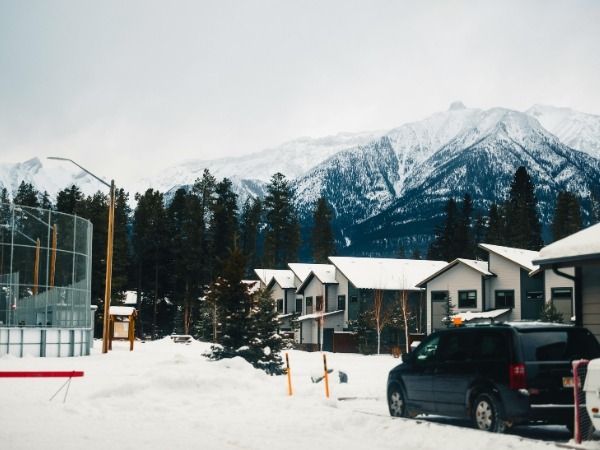
Canadian winters are beautiful, but driving conditions can be challenging if you are not experienced. Drivers may encounter snow, ice, short daylight hours, and rapidly changing weather, especially outside cities and on mountain roads.
Some provinces have strict winter tyre rules. In Québec, winter tyres are required during the winter season, and the rule also applies to rental vehicles registered in Québec. In British Columbia, many routes require winter tyres or tyre chains for much of the cold season.
In the largest city centres, driving can be slow and tiring, and finding a parking space can take time. Many cities use paid on-street parking systems, and parking enforcement is managed through local bylaws.
Public transport in Canada is usually the most efficient in major cities and along the busiest routes, where demand supports higher service frequency.
In large Canadian cities, most travellers rely on bus networks together with rapid transit systems such as subways and automated trains. These systems connect major neighbourhoods, city centres, and important travel areas.
Some regions also offer commuter trains that link suburbs with the city centre. These services can be helpful for day trips and airport connections. Before travelling, it is important to check schedules and service hours, especially during the evening or on public holidays.
If your trip is mainly city-based, public transport can be the most comfortable and cost-effective way to travel in Canada.
If you are watching your money, public transport is often the easiest win. City networks sell single fares and passes, and contactless payment can help you avoid buying special cards if you only ride a little.
With public transport, you do not need to navigate unfamiliar lanes, search for parking, or learn every local sign rule on day one. You also avoid parking systems and time limits that can lead to tickets if you misread rules.
Public transport is not perfect everywhere. Common issues include limited coverage, strict timetables, extra transfers, longer wait times, and route limitations outside big centres.
The biggest problem is access beyond cities. Rural attractions, small towns, and many nature areas are not well served by frequent buses or trains. You will need a taxi, a tour, or a car to reach the final destination. So, if your plan includes a park trail, a remote trailhead, or rural roads, public transport alone can be limiting.
Public transport runs on fixed timetables. If you miss the last departure, you may wait a long time, especially late at night, on weekends, or on holidays. This matters when you want photo stops, or you do not like time pressure.
Between cities, trains and coaches can be comfortable, but they can also take longer than driving, depending on stops and routing. You may need to arrive early for boarding, station transfers, and extra connection time.
Getting around Canada comes down to how you want to experience the journey. Public transport is reliable in cities, but the country’s vast landscapes and remote destinations are best explored by car. Instead of looking for a single option, think about your days in the city and your nature trips, and choose the best mode of transport for each.
Rent a car in Canada with Final Rentals to explore beyond the cities and travel at your own pace. Select your pickup location, enter your travel dates, and choose a vehicle for your trip. Book and manage your car rental at any time. Download the Final Rentals app on Google Play and the App Store.
Yes, if your trip includes national parks, smaller towns, or long scenic drives, renting can give more freedom and save time. If you stay mainly in big cities, public transport is often simpler, cheaper, and less stressful.
In Toronto, Vancouver, and Montréal, it is usually visitor-friendly because payment and information systems are clear, and many areas are well served. It can feel harder if you meet language changes, station transfers, or late-night gaps. Use maps, keep a small time buffer, and ask staff when unsure.
In most cases, visitors can use a valid driver’s licence from their home country if it is in English or French. If the licence is in another language, an International Driving Permit (IDP) is usually recommended.