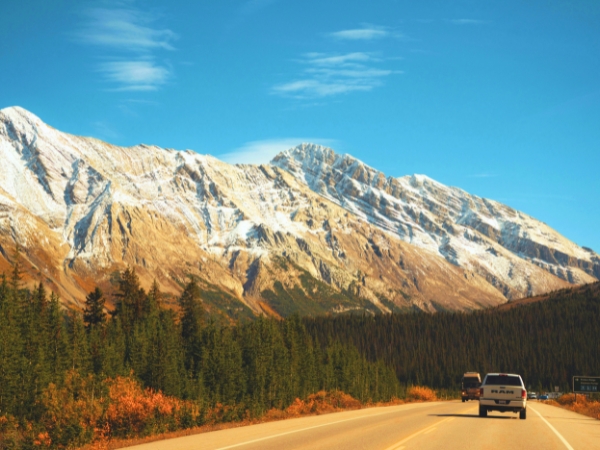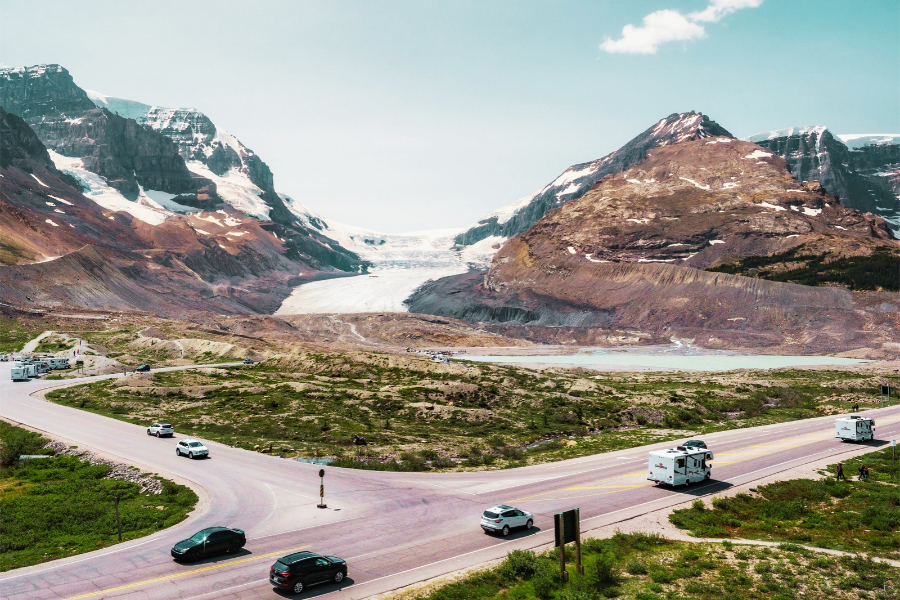
The Icefields Parkway (Highway 93 North) is a famous scenic road through the Canadian Rockies. It stretches 232 kilometres from Lake Louise in Banff National Park to Jasper in Jasper National Park.
If you rent a car in Calgary, driving the Icefields Parkway takes you through remote mountains with limited services. Mobile coverage is scarce, fuel stops are limited, and the weather can change quickly. Our guide explains how to prepare for the drive, enjoy the scenic stops, and stay safe along the way.
Things to Know Before Driving the Icefields Parkway

Planning matters when you travel between Banff and Jasper. Before driving the Icefields Parkway, consider the journey time, seasonal rules, fuel stops, and your rental terms.
1. The Icefields Parkway Takes Around 3 Hours Without Stops
The 232-kilometre route is paved. Driving straight from Lake Louise to Jasper usually takes around 3 to 4 hours. Traffic and weather can push the journey towards 5 hours. Most visitors spend 6 to 8 hours exploring viewpoints, taking photographs, and stopping for walks. Give yourself a full day for an Icefields Parkway road trip, rather than planning another long drive afterwards.
2. Summer Is the Best Time to Drive the Icefields Parkway
June to September is usually the most convenient period, with longer days and more open facilities. July and August bring the biggest crowds, so reach popular stops early.
Spring and autumn are quieter, but cold nights and snow can affect higher areas. Even June and September can bring snowfall. When driving the Icefields Parkway outside peak summer, pack warm layers and keep your plans flexible if the forecast changes.
3. A National Park Pass Is Required for the Drive
You need a valid national park pass for the Icefields Parkway because the route crosses Banff and Jasper national parks. A daily family or group pass covers up to 7 people travelling together in one car. It costs around CAD 25 per day, while an adult pass costs around CAD 12. Youth under 18 enter free. An annual Discovery Pass covers repeat visits to participating national parks. Buy your pass online or at a park entrance or visitor centre before setting off.
4. Fuel, Food, and Toilets Are Limited Along the Route
If you're looking for gas stations on Icefields Parkway, there's only one at Saskatchewan River Crossing. It is about 80 kilometres north of Lake Louise and normally opens from May to mid-October. Seasonal dates can change, so check ahead.
When driving the Icefield Parkway outside summer, begin with a full tank from Lake Louise or Jasper. You can find limited meals and accommodation at Saskatchewan River Crossing when its facilities are open. Lake Louise and Jasper have a wider choice of shops and restaurants.
Bring your own food and drinking water, particularly in spring, autumn, and winter. Most open day-use areas have basic pit toilets, but some close outside summer.
5. Rental Car Terms Vary Between Rental Companies
A compact car works on the paved highway in good weather. An SUV offers more room for people, luggage, and outdoor gear. Before departure, check the brakes, tyres, mileage terms, insurance, and breakdown assistance. Confirm whether you can drive into Jasper and return the car somewhere else.
6. Winter Tyres Are Required During the Winter Season
From 1 November to 31 March, you must have winter tyres or chains on this highway. The requirement also applies whenever snow or ice covers the road.
Approved tyres carry a mountain-and-snowflake or M+S marking. Ask your car rental company about fitted tyres before booking, because winter tyres may cost extra. If you're unfamiliar with winter driving, avoid the route during storms. Proper tyres matter more than relying on all-wheel drive alone.
7. Weather Conditions Can Cause Sudden Road Closures
Mountain weather changes quickly, so Icefields Parkway road conditions can differ between valleys and high passes. Snow, ice, fog, strong winds, and heavy rain can affect visibility and grip, even during warmer months.
In winter, storms and avalanche control can lead to sudden closures. Check 511 Alberta and the forecast before you depart. If you're driving the Icefield Parkway when it closes, a detour may add several hours. Slow down near road crews and postpone your drive when conditions are unsafe.
8. Mobile Signal Is Limited Along Much of the Route
There is no reliable year-round mobile coverage on most of the highway. Limited reception may be available near the Columbia Icefield during the warmer months, but never depend on it.
Before driving the Icefield Parkway, download offline maps, save addresses, and take printed directions. Write down emergency contacts and tell someone when you expect to arrive. Pack water, snacks, blankets, and a first-aid kit, especially outside summer.
Scenic Stops and Driving Rules on the Icefields Parkway
Once you've planned the essentials, you can focus on the lakes, glaciers, and waterfalls along the route. You'll also need to follow parking and wildlife rules when visiting these places.
Best Scenic Stops Between Lake Louise and Jasper
Start with Crowfoot Glacier viewpoint and Bow Lake, where you can see Bow Glacier across the water. Continue to the Peyto Lake lookout, reached by a short walk from the Bow Summit parking area. The lake is famous for its turquoise colour and fox-like shape.
Farther north, visit the Columbia Icefield Centre, around 105 kilometres south of Jasper, to view the Athabasca Glacier. You can also join a guided glacier activity when tours operate. Continue towards Sunwapta Falls and Athabasca Falls, where marked paths and viewing platforms offer impressive waterfall views.

Parking Rules at Viewpoints and Roadside Pullouts
When driving the Icefield Parkway, use designated pullouts and marked car parks for photographs or rest stops. Popular spaces fill early during summer, and you cannot wait in the traffic lane. Never park around blind bends or block passing cars. If a viewing area is full, continue to another safe stop or return later. Pull your car completely off the road before getting out, and follow any no-stopping signs.
Safe Driving Practices Around Wildlife
You may see elk, deer, bears, bighorn sheep, or mountain goats near the road. Follow posted speed limits, which are generally no higher than 90 kilometres per hour. Be especially alert around dawn and dusk, and slow down safely if animals are nearby.
Keep at least 30 metres from deer, elk, sheep, and goats, and 100 metres from bears and wolves. Never feed, approach, or frighten wildlife. Stay inside your car for photographs and only stop where it is safe and permitted. Animals may charge when threatened, so give them plenty of space and move on without blocking traffic.
Seasonal Access to Glacier Tours and Hiking Trails
At the Columbia Icefield, guided glacier tours and the Glacier Skywalk generally operate from May to mid-October, depending on conditions. Book ahead during July and August, as popular sessions can fill. These activities usually close in winter.
For hiking, Parker Ridge and Wilcox Pass are popular choices near the Columbia Icefield. Higher trails can remain snowy until mid-July, and ice may return in autumn.
Check trail access, stay on marked paths, and carry bear spray if you're hiking. Start early when daylight hours are shorter. Summer offers more tours and open facilities, while winter visitors may see frozen waterfalls and quieter viewpoints.
Takeaway
Driving the Icefield Parkway is worth setting aside a full day, even if the distance looks manageable on a map. A busy viewpoint or a sudden change in the mountain weather can easily affect your plans. Choose a few stops that interest you most, and leave enough time to reach Jasper safely. You do not need to visit every attraction to have a memorable trip through the Canadian Rockies.
Rent a vehicle in Canada with Final Rentals to start your long road trip towards the Canadian Rockies. Since you'll be spending several hours on the road, consider a comfortable SUV with plenty of room for luggage and travel essentials. Book and manage your car rental anytime by downloading the Final Rentals app on Google Play and the App Store.
Frequently Asked Questions
What are the driving conditions on the Icefields Parkway?
The highway is fully paved, but you should expect mountain slopes, bends, and changing weather. In clear summer conditions, most confident drivers can manage the route comfortably. However, snow and ice can appear outside winter, especially at higher elevations. Check 511 Alberta for road updates before departure, reduce your speed in poor visibility, and stay prepared for sudden storms.
Where can drivers refuel along the Icefields Parkway?
The only petrol station along the route is at Saskatchewan River Crossing, about 80 kilometres north of Lake Louise. It normally opens during the warmer months, generally from May to mid-October. Hours and seasonal dates can change. During winter, there is no fuel available between Lake Louise and Jasper. Start with a full tank rather than relying on services along the road.
What vehicle is suitable for the Icefields Parkway?
A modern car or SUV in good condition is suitable for the paved highway. An SUV or all-wheel-drive car can provide extra luggage space or traction, but neither replaces careful driving. In winter, you need approved tyres or chains. Review your rental agreement for mileage limits, insurance, and mountain travel restrictions. Fill your tank and inspect the vehicle before departure.