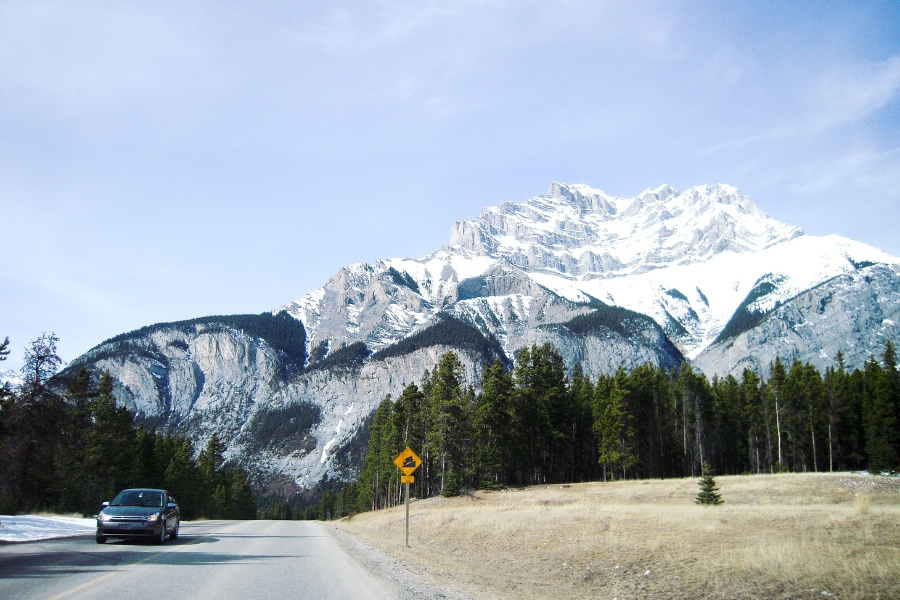
Driving in the Canadian Rockies can look intimidating on a map, but most main routes are manageable for first-time visitors. Paved highways and well-marked scenic roads link Banff, Lake Louise, Jasper, Yoho, and Kootenay. The bigger challenges are the changing weather, wildlife, busy car parks, and finding safe places to stop.
If you plan to rent a car in Calgary, consider your route and travel dates before choosing a vehicle. Even a 3-hour drive can take a full day once you stop to enjoy the mountains. Our guide covers road conditions, scenic routes, seasonal restrictions, and practical car hire tips for your trip.
Most popular mountain routes are paved, so you generally won't need off-road driving skills. You'll still need to adjust your speed as road width, weather, and visibility change between valleys and higher passes.

Confident drivers can handle major highways in good weather. Highway 1, the Trans-Canada Highway, connects Banff with Yoho, while Highway 93 runs north towards Jasper and south through Kootenay. These main roads are generally wider than smaller access roads.
Some side roads are trickier. Yoho Valley Road has very tight mountain bends. Drivers of vehicles longer than 7 metres must reverse around some turns, and trailers are prohibited. When driving in Canada, keep to the right. If you normally drive on the left, take care at junctions and when leaving car parks. Speed signs show kilometres per hour.
Follow posted speed limits, which change around towns, parkways, junctions, roadworks, and wildlife areas. The Icefields Parkway covers 232 kilometres between Lake Louise and Jasper. With walks, photographs, and parking stops, you'll often spend the whole day there.

You might encounter elk, deer, bears, bighorn sheep, or mountain goats beside the road. While driving in the Canadian Rockies, stay in your lane and slow down smoothly. Another animal may follow the first.
Keep your distance, never feed wildlife, and avoid blocking traffic for photographs. Use a marked viewpoint or car park instead of a live lane or blind bend. The Icefields Parkway passes 38 major avalanche paths with no-stopping areas. Wildlife can also appear around developed areas, not just remote roads.
You can leave a valley in rain and reach snow or ice at a higher pass. Even summer brings occasional snowfall, particularly along the Icefields Parkway. Winter conditions there can last from early November into mid-June. Winter brings shorter daylight and slippery surfaces, and avalanche control and storms can temporarily close roads. For a summer road trip in Canada, expect longer days and more open services.
Choose routes for what you want to see, not just how quickly you can reach the next town. Some are direct highways; others deserve most of a day. Banff, Jasper, and Yoho are among the best mountain parks in Canada.
From Calgary, follow Highway 1 west towards Canmore and Banff. You'll pass open countryside before the foothills give way to mountain peaks. The drive usually takes about 1.5 hours, depending on your starting point and traffic. It's a straightforward introduction to mountain travel after you pick up your car at Calgary Airport.
Highway 1 is the faster route to Lake Louise. Choose the Bow Valley Parkway, Highway 1A, for a slower drive with stops such as Johnston Canyon and Morant's Curve.
Check seasonal restrictions on the eastern 17-kilometre section. From 1 March to 25 June, travel is prohibited between 8:00 P.M. and 8:00 A.M. Use Highway 1 and Castle Junction to reach Johnston Canyon when the eastern section is closed. Restrictions may change in later seasons.
Highway 93 North links Lake Louise and Jasper over 232 kilometres. Driving in the Canadian Rockies reaches its scenic peak here. Popular stops include Bow Lake, Peyto Lake, the Columbia Icefield, Sunwapta Falls, and Athabasca Falls. At Big Bend, stop only at a designated roadside viewing area.
If you're staying in Jasper, drive the parkway one way and give yourself most of the day. Otherwise, choose a realistic turnaround point. The route has limited seasonal services, no dependable mobile coverage, and high passes where conditions change quickly.
Head west over the Continental Divide and Kicking Horse Pass towards Field in British Columbia. Visit Emerald Lake or stop at the Spiral Tunnels viewpoints.
Takakkaw Falls is another rewarding detour, reached by Yoho Valley Road when open. The road usually operates from mid-June to mid-October, depending on weather. Remember its sharp switchbacks and restrictions on trailers and vehicles longer than 7 metres.
From Castle Junction, follow Highway 93 South across the Continental Divide towards Radium Hot Springs in Kootenay National Park. Stop at Marble Canyon, then continue towards Sinclair Canyon and the long mountain valleys. It's a quieter alternative to the Banff-to-Lake Louise corridor, with plenty of scenic stops.
Watch for changing weather outside summer. Seasonal day-use areas have fewer services, and roadworks can affect journey times. Check current notices before setting off. Mobile coverage is also unavailable through much of Kootenay National Park.
Make Maligne Lake a separate trip from Jasper rather than squeezing it between long highway journeys. Follow the valley road past Medicine Lake towards Maligne Lake. Check road notices and site access for your travel date.
Your vehicle choice depends more on the season, luggage, and route than on mountain scenery alone. A little planning makes driving in the Canadian Rockies more practical, especially when you visit several parks.
Calgary Airport is a practical starting point for Banff and Lake Louise. Edmonton Airport makes more sense when Jasper is your first destination. An Edmonton to Jasper road trip follows Highway 16 through Hinton. You can also start in Calgary and finish in Edmonton to avoid retracing the same route.
Compare airport pickup locations and return terms before booking. A Calgary to Jasper to Edmonton trip can save a return drive. However, one-way hires may carry an extra charge, depending on availability and the rental company. For a Calgary departure, renting a car at Calgary International Airport gives you a direct start towards Banff.
You can book a car with Final Rentals and compare standard cars and SUVs for your planned mountain routes. Canadian rental terms include unlimited mileage and third-party liability insurance, while winter tyres must be arranged separately.
A compact or medium car is usually enough on paved routes in good weather. Before choosing, consider passenger numbers, boot space, and time spent driving. You may find a smaller car easier to park around Banff, while an SUV gives you more room for luggage.
Extra height or all-wheel drive is not required for the main paved routes in good weather. All-wheel drive may help when pulling away on slippery ground, but winter tyres are more important.
On the Icefields Parkway, winter tyres or chains are mandatory from 1 November to 31 March. The rule also applies whenever snow or ice covers the road. In British Columbia, many designated routes require winter tyres or chains from 1 October to 30 April. Some have shorter periods.
Before you pick up your car, confirm fitted tyres and restrictions on unpaved roads. Review car rental insurance requirements in Canada, especially collision damage waivers, theft protection, and exclusions for windscreens, tyres, and undercarriage damage.
You'll generally need a park pass to sightsee and drive the Icefields and Bow Valley Parkways. Passing through a park on a main highway without stopping is usually exempt. That exception does not cover the 2 scenic parkways. Check the admission dates before travelling.
At Lake Louise, lakeshore parking is limited and paid during the shuttle season, separately from park entry. Spaces can fill up around sunrise in summer. Consider reserving a shuttle instead of counting on a space. Moraine Lake Road is closed to ordinary rental cars year-round, with access mainly by seasonal shuttles and authorised vehicles. Registered lodge guests have an exception.
Fill your tank before the Icefields Parkway. Its only intermediate fuel stop is at Saskatchewan River Crossing and opens seasonally. In winter, no roadside services are available between Lake Louise and Jasper.
Mobile coverage is unreliable along the parkway and absent across much of Kootenay National Park. Plan your rest breaks as carefully as your fuel stops, especially when travelling outside the main summer season.
Driving in the Canadian Rockies requires your full attention, even when everyone else is admiring the views. If another traveller can share the driving, make sure they're authorised under your rental agreement. Take proper breaks rather than pushing through a long journey.
Rent a car in Canada with Final Rentals to start planning your mountain trip. With a fair fuel policy, you can return your car at the same fuel level as pick-up without extra refuelling charges. Book and manage your car rental anytime by downloading the Final Rentals app on Google Play and the App Store.
Road conditions in the Canadian Rockies are generally good on major paved routes during summer. However, mountain weather can change quickly as elevation increases. Winter and the months around it may bring snow, ice, reduced visibility, and temporary closures.
The best car for the Canadian Rockies is usually a reliable standard car or SUV. Choose enough space for everyone and their bags. A sedan works well on paved visitor roads in good weather. In winter, suitable tyres, braking distance, and careful driving matter more than choosing a larger car. Confirm tyre equipment and rental restrictions before booking.
The best time to drive in the Canadian Rockies for easier conditions is generally July and August, when days are longer and more visitor services are open. June and early September can also be pleasant, although snow is possible at higher elevations. Summer still brings busy car parks and wildlife near roads, so check weather forecasts and road notices daily, especially before remote drives.