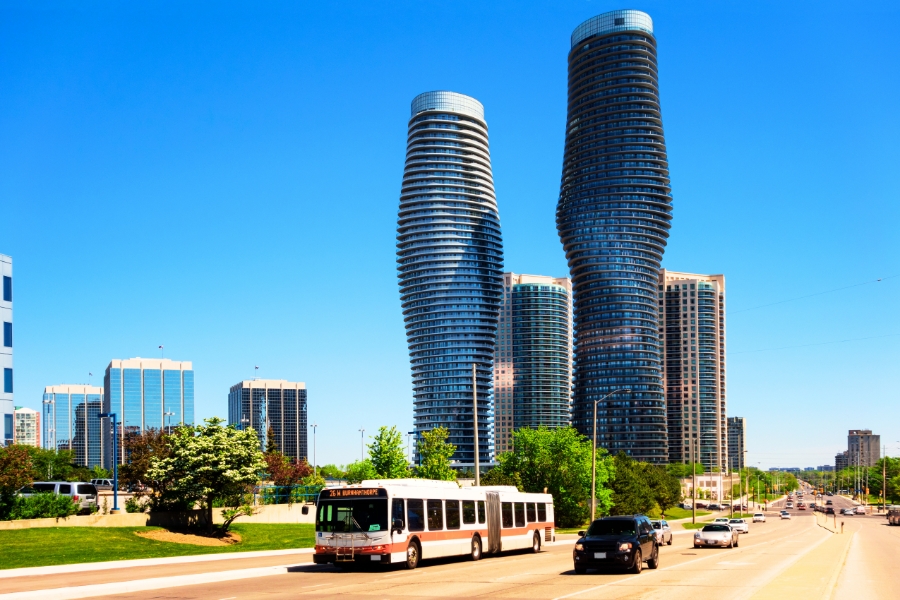
Mississauga is a large, spread-out city on Lake Ontario, with distinct neighbourhoods rather than one dense centre. City Centre, Streetsville, Port Credit, and Malton are among the main areas visitors often use as bases.
Whether you need a rental car in Mississauga depends on where you stay and what you plan to do. Local buses and regional trains cover many popular areas, while a car gives you more flexibility for wider travel. Our guide compares driving, public transport, travel times, and overall trip durations so you can choose what works best for your stay.
Your choice depends on where you stay, how far you travel, and how many stops you plan each day. A car can save time, but parking and traffic still need some thought.

Your accommodation location can make a big difference. If you stay near City Centre or a regional train station, many places are easier to reach. City Centre has a major bus terminal, while Port Credit and Clarkson have rail links into Toronto. Nearby shops and restaurants can also reduce how often you need transport.
Hotels farther from main bus routes can mean longer walks and extra transfers. Check the nearest bus stop or train station before booking your stay. If you are based near a highway or suburban area, a rental car in Mississauga may be more convenient.
A relaxed day with only a few stops in one area is often easy to do by bus or on foot. You could spend several hours around City Centre without crossing the whole city.
A fuller day is different. You might visit a museum, shop in Erin Mills, then have dinner in Port Credit. Several bus connections can add waiting time. Families, groups, and travellers with luggage may also find driving more practical than changing buses with bags or pushchairs. This matters even more after a flight or on a busy sightseeing day.
Compare the full journey rather than only the distance. Bus trips include walking, waiting, and transfers, while driving includes time spent in traffic and at parking stops.
A trip between Port Credit and City Centre covers roughly 7 kilometres. Local buses can take around 25 to 35 minutes, depending on the route and time of day. Driving the same distance may take around 15 to 20 minutes in lighter traffic. Check both options before a busy day. If you miss an infrequent service, you may also wait longer for the next one.
You do not have to drive throughout your whole stay. Some travellers use buses or trains on central days, then drive for wider trips. This can make a rental car in Mississauga more useful when you actually need the extra range. You might spend 2 or 3 days around City Centre and Toronto without a car. Then you could pick up a car for longer journeys around the region.

Mississauga covers about 292 square kilometres, so many popular areas are well apart. Local buses cover most neighbourhoods, while regional trains connect several stations with Toronto.
You can rely more on transit if you stay near City Centre, Cooksville, Erindale, Port Credit, or another major stop. These areas have bus links, nearby services, and better access to regional trains.
City Centre has frequent local bus connections, while Port Credit and Clarkson have direct regional rail services to Toronto. If your plans stay within one neighbourhood, or along one main route, transit can be enough. For many visitors, Toronto is also easier to reach by regional train than by car. From Port Credit or Clarkson, trains reach central Toronto in around 30 to 40 minutes. You can avoid downtown traffic and city parking costs at the same time.
Mississauga covers a wide area, and many places are separated by highways and large arterial roads. City Centre is far from several older neighbourhood centres, so walking between them is not realistic.
Port Credit and Streetsville are roughly 15 kilometres apart by road. A transit journey can take around 45 to 60 minutes, depending on connections. Driving can take closer to 20 to 30 minutes outside of heavier traffic.
Distance matters even more when you plan trips beyond Mississauga. Niagara Falls, Hamilton, and other regional stops are easier to combine by car. If you plan to stay closer to the city, public transport may be enough.
Your route should guide the choice. Buses are useful for local journeys, while regional trains work well for direct trips into Toronto.
Local buses connect neighbourhoods, shopping areas, rail stations, and City Centre. Main corridors include Hurontario, Dundas, Burnhamthorpe, and Lakeshore. Major routes often run more frequently during the day, although schedules vary by route. Later services can be less frequent, so check your return journey before going out.
Regional trains connect Port Credit and Clarkson with central Toronto on the Lakeshore corridor. Cooksville, Streetsville, Erindale, Meadowvale, and Lisgar also have rail links on another commuter corridor. Port Credit and Clarkson are useful when you want a direct trip to Toronto. Journey times are usually around 30 to 40 minutes, depending on the station and service.
A rental car gives you more control when your itinerary extends beyond the main transit corridors. You can reach Niagara Falls, Hamilton, Blue Mountain, cottage areas, or Muskoka without planning around several connections. Highways 401, 403, and the Queen Elizabeth Way connect Mississauga to nearby areas. Highway 407 is a toll road, and charges may appear after your rental ends because billing can take time.
If your plans cover several distant stops, book a rental car in Mississauga with Final Rentals. You can choose compact, standard, or SUV car types, with unlimited mileage and Third Party Liability Insurance.
Rideshares and taxis can fill gaps when you do not want a car for the whole day. They are useful for airport transfers, late-night returns, or isolated stops away from regular bus routes. A short ride can make sense when your wider plan is mostly transit-based. You also avoid parking when you only need one direct journey.
A rental car in Mississauga makes more sense when your plans cover several areas or include day trips. Transit can still work well for slower days around the city or direct trips to Toronto. Think about your route, luggage, and travel times, then choose the option that keeps your trip simple and comfortable.
Rent a car in Mississauga with Final Rentals to keep longer days flexible without changing your plans around bus connections. You can return the car with the same fuel level and have a 1-hour return grace period. Book and manage your car rental at any time. Download the Final Rentals app on Google Play and the App Store.
It depends on your itinerary. Mississauga is very spread out, so a car is useful if you plan to visit several areas or take longer day trips. If you stay near City Centre or neighbourhoods with good bus and regional train links, you can manage without one. Transit and occasional rideshares can cover many local journeys when your daily plans stay fairly compact.
Mississauga has a local bus network connecting its main neighbourhoods, shopping areas, and regional rail stations. Regional trains serve Port Credit, Clarkson, Cooksville, and other stations. Toronto journeys from lakeshore stations usually take around 30 to 40 minutes.
Yes. Local driving follows normal Ontario road rules, and major roads are clearly signed. Highways 401, 403, and the Queen Elizabeth Way connect different parts of the city. Traffic can be heavy during busy periods, while some areas have paid parking. A car is often more convenient for several stops, luggage, or longer trips beyond Mississauga.